
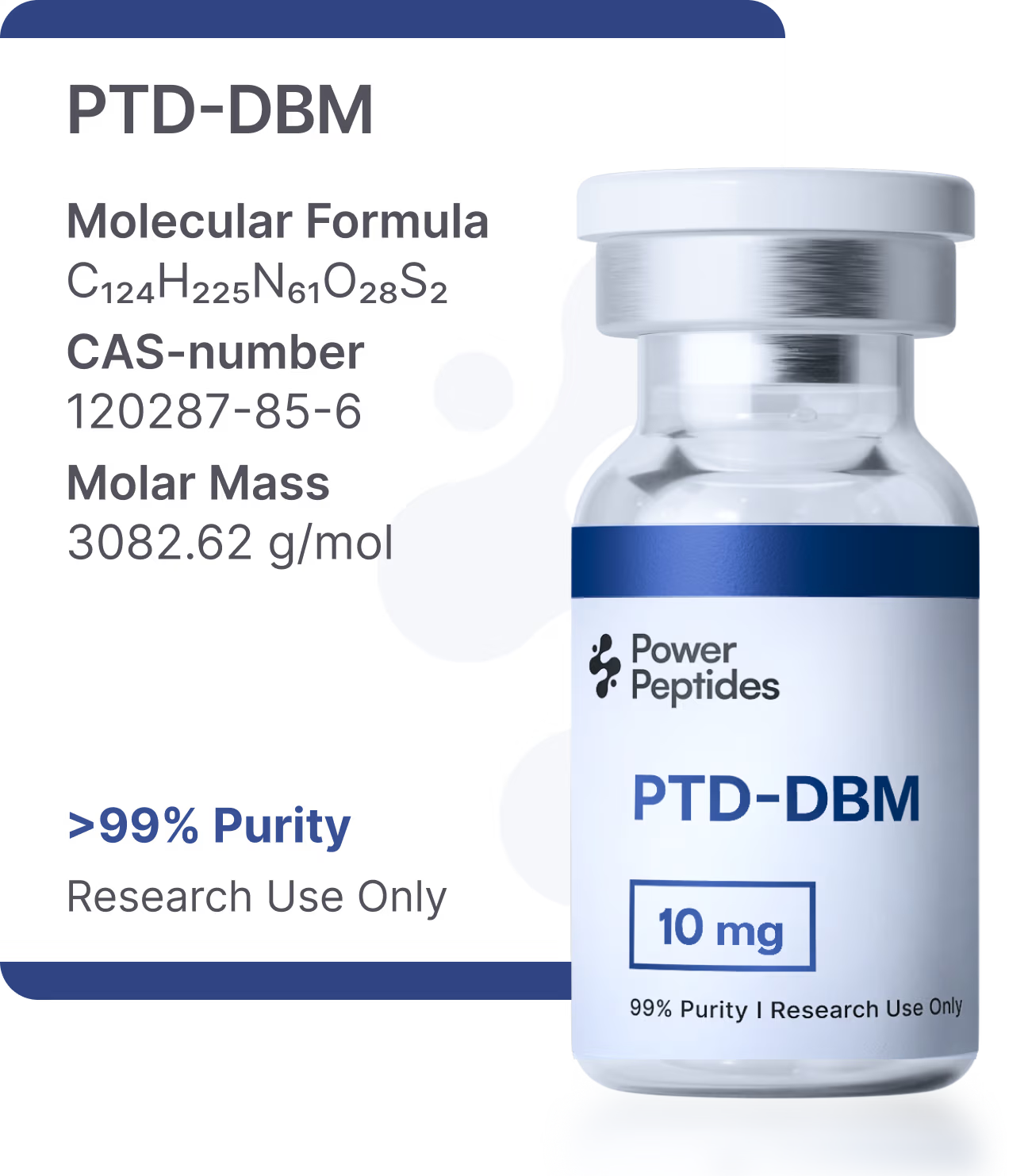

PTD-DBM
PTD-DBM research compound. Supplied as a lyophilized peptide reference material for laboratory research applications.
This product is purity-tested for compound identity and is intended for in vitro experimentation, analytical reference, or scientific characterization studies.
For laboratory research use only. Not for human or veterinary use.
$187.99
⚡️ Ships Today if ordered within 8 hrs.
🚚 Free FedEx 2Day® on orders $300+
🚚 Free FedEx Standard Overnight® on orders $1000+
♻️ Third party tested.

Product Details
Characteristics
| Molecular Formula | C₁₂₄H₂₂₅N₆₁O₂₈S₂ |
| CAS Number | 120287-85-6 or 1609454-11-6 |
| Molar Mass | 3082.62 g/mol |
| Amino Acid Sequence | Arg-Arg-Arg-Arg-Arg-Arg-Arg-Arg-Gly-Gly-Gly-Gly-Arg-Lys-Thr-Gly-His-Gln-Ile-Cys-Lys-Phe-Arg-Lys-Cys |
| Synonyms | Protein Transduction Domain-fused Dishevelled Binding Motif, Protein transduction domain (PTD)-Dvl-binding motif (DBM), Hair growth peptide, Follicle regeneration peptide |
| Solubility | Water-soluble |
| Organoleptic Profile | White to off-white powder |
| Composition | Lyophilized powder – requires reconstitution |
How is PTD-DBM Used in Research?
PTD-DBM peptide mechanism of action research suggests it may primarily function as a peptide inhibitor of the CXXC5-Dishevelled protein interaction, potentially activating the Wnt/β-catenin signaling pathway. Current studies on ptd-dbm indicate the compound may demonstrate enhanced hair follicle regeneration properties through multiple potential molecular pathways.
The primary mechanism research suggests that ptd dbm peptide may involve the competitive binding to the Dishevelled (Dvl) protein, potentially preventing CXXC5 from inhibiting the Wnt/β-catenin pathway. By disrupting this inhibitory interaction, ptd dbm may enhance downstream signaling involved in hair follicle development and regeneration through both direct and indirect cellular pathways.
Additionally, studies indicate PTD-DBM may have effects on wound-induced hair neogenesis (WIHN) and tissue regeneration. Research suggests it may stimulate stem cells in hair follicles and possibly enhance keratinocyte proliferation, potentially contributing to improved follicle cycling and hair growth phases.
The peptide’s protein transduction domain (PTD) structure, consisting of eight arginine residues, may allow for enhanced cellular penetration, possibly leading to more consistent therapeutic effects when applied topically to affected areas.
Research also suggests potential synergistic effects when combined with compounds like valproic acid (VPA), which may further activate the Wnt/β-catenin pathway through GSK3β inhibition.
For research institutions looking to buy ptd-dbm from a verified ptd-dbm peptide supplier, sourcing high-purity material with validated analytical data is critical to ensure experimental accuracy and reproducibility.
Areas of Study
- Hair Follicle Regeneration: Research on ptd-dbm peptide suggests it may have potential effects on new hair follicle formation and may help prevent follicle miniaturization studied in laboratory research. Studies investigating ptd dbm indicate its mechanism targeting the CXXC5–Dvl interaction may support activation of the Wnt/β-catenin pathway, which plays a key role in follicular development.
- Wound Healing: Studies indicate ptd-dbm may improve cutaneous wound healing and may offer potential benefits for tissue regeneration and collagen synthesis.
- Extended Effects: Research suggests hair growth may be maintained even after treatment cessation, potentially indicating sustained follicle activation.
- Stem Cell Activation: Studies suggest it may have effects on follicle stem cell populations, potentially contributing to enhanced anagen phase duration.
- Combination Potential: Research indicates there may be possible synergistic effects when ptd-dbm is combined with other therapeutic agents like valproic acid or microneedling procedures.
Summary
PTD-DBM may represent an advancement in peptide-based hair regeneration research, in laboratory research contexts. Its unique structure targeting the CXXC5-Dvl interaction may provide a novel approach to activating hair growth pathways while potentially maintaining beneficial effects even after treatment discontinuation. Current investigations indicate that ptd-dbm may have promising research applications in both hair loss prevention and active follicle regeneration. Ongoing studies are also exploring broader regenerative potential, including wound healing and tissue repair models.
References
- Lee SH, Seo SH, Lee DH, Pi LQ, Lee WS, Choi KY. Targeting of CXXC5 by a Competing Peptide Stimulates Hair Regrowth and Wound-Induced Hair Neogenesis. Journal of Investigative Dermatology. 2017 Nov;137(11):2260-2269. doi: 10.1016/j.jid.2017.04.038. PMID: 28942361.
- Lee SH, Kim MY, Kim HY, Lee YM, Kim H, Nam KA, Roh MR, Min do S, Chung KY, Choi KY. The Dishevelled-binding protein CXXC5 negatively regulates cutaneous wound healing. J Exp Med. 2015 Jun 29;212(7):1061-80. doi: 10.1084/jem.20141601. Epub 2015 Jun 8. PMID: 26056233; PMCID: PMC4493411.
- Ryu, Y.C.; Park, J.; Kim, Y.-R.; Choi, S.; Kim, G.-U.; Kim, E.; Hwang, Y.; Kim, H.; Han, G.; Lee, S.-H.; et al. CXXC5 Mediates DHT-Induced Signaling via PGD2. Cells 2023, 12, 555. https://doi.org/10.3390/cells12040555
- Lee SH, Yoon J, Shin SH, Zahoor M, Kim HJ, Park PJ, Park WS, Min do S, Kim HY, Choi KY. Valproic acid induces hair regeneration in murine model and activates alkaline phosphatase activity in human dermal papilla cells. PLoS One. 2012;7(4):e34152. doi: 10.1371/journal.pone.0034152. Epub 2012 Apr 10. PMID: 22506014; PMCID: PMC3323655.
- Liu D, Xu Q, Meng X, Liu X, Liu J. Status of research on the development and regeneration of hair follicles. Int J Med Sci. 2024 Jan 1;21(1):80-94. doi: 10.7150/ijms.88508. PMID: 38164355; PMCID: PMC10750333.
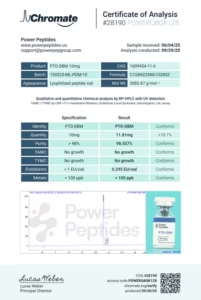
Certificate of Analysis (COA)
Resource
Research Peptides Supported by Verifiable Testing
Power Peptides™ is more than just a U.S. supplier of research peptides. We are helping to power the next wave of peptide research by providing peptides that support our clients’ work.
Consistent Quality Standards
Our internal processes and meticulous material sourcing practices drive consistency. Our peptides meet rigorous internal quality standards.
Independently Verified
Every product undergoes extensive testing, both in-house and through independent, third-party laboratories.
Fast Shipping & Support
We provide fast and reliable shipping, using established couriers and high-quality packaging materials. This helps to ensure that your peptides arrive promptly and in optimal condition.