
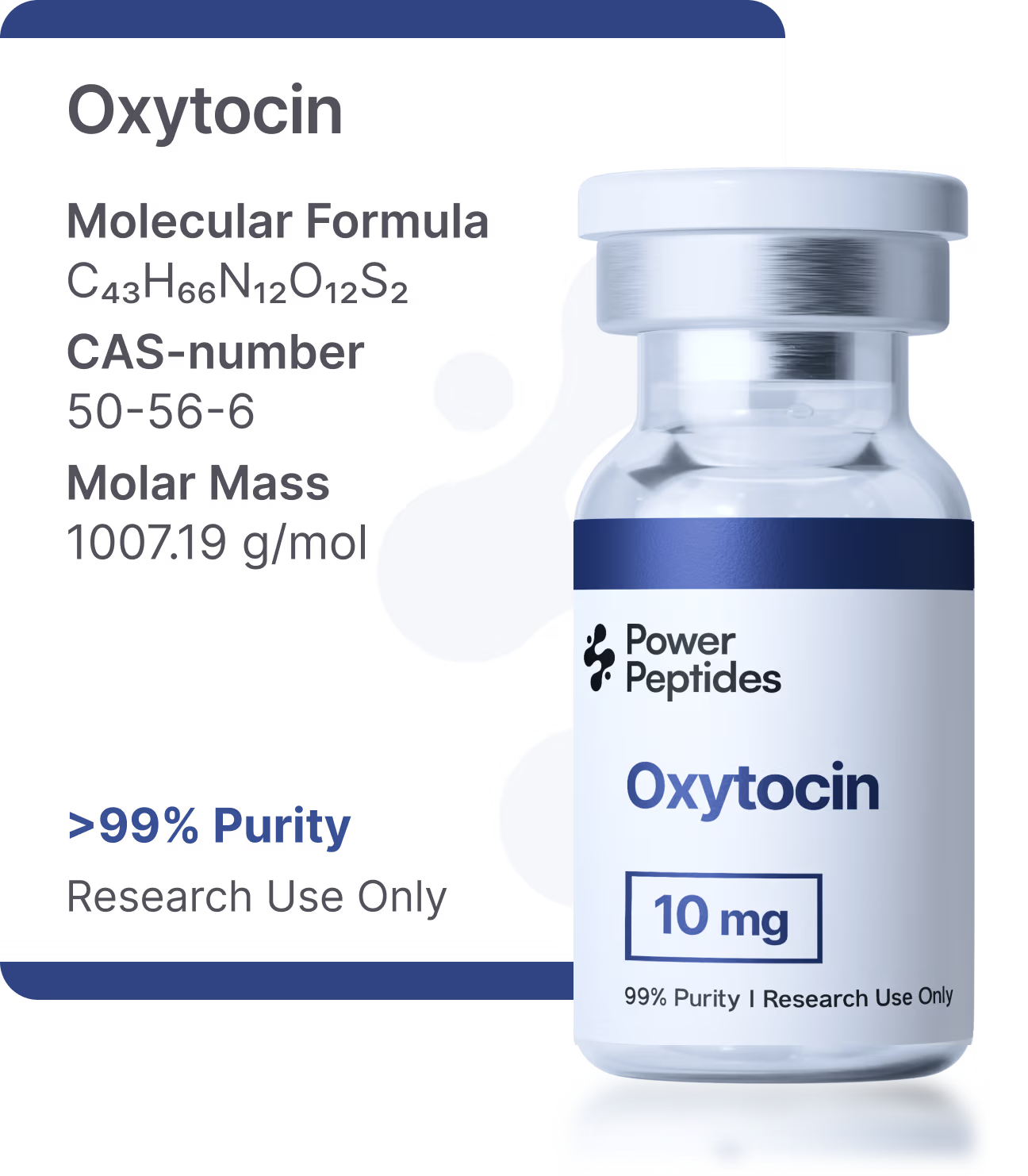

Oxytocin
Oxytocin research compound. Supplied as a lyophilized peptide reference material for laboratory research applications.
This product is purity-tested for compound identity and is intended for in vitro experimentation, analytical reference, or scientific characterization studies.
For laboratory research use only. Not for human or veterinary use.
Original price was: $64.99.$22.99Current price is: $22.99.
⚡️ Ships Today if ordered within 8 hrs.
🚚 Free FedEx 2Day® on orders $300+
🚚 Free FedEx Standard Overnight® on orders $1000+
♻️ Third party tested.

Product Details
Characteristics
| Molecular Formula | C43H66N12O12S2 |
| CAS Number | 50-56-6 |
| Molar Mass | 1007.19 g/mol |
| Amino Acid Sequence | Cys-Tyr-Ile-Gln-Asn-Cys-Pro-Leu-Gly |
| Synonyms | α-Hypophamine, Ocytocin, Syntocinon |
| Solubility | Water-soluble |
| Organoleptic Profile | White to off-white powder |
| Composition | Lyophilized powder – requires reconstitution |
How does Oxytocin work?
Oxytocin exerts its effects by binding to specific G protein-coupled receptors, known as oxytocin receptors (OXTRs), which are expressed in various tissues throughout the body, including the brain, uterus, and mammary glands. Upon binding to OXTRs, oxytocin triggers intracellular signaling cascades that lead to diverse physiological responses, such as uterine contractions during labor, milk ejection during lactation, and the promotion of social bonding and trust.In the central nervous system, oxytocin acts as a neuromodulator, influencing the activity of various neurotransmitter systems, such as dopamine, serotonin, and GABA. These interactions are thought to underlie oxytocin’s effects on social behavior, stress regulation, and emotional processing. Oxytocin peptide has been shown to enhance the salience of social stimuli, facilitate social recognition and memory, and reduce anxiety and stress responses in mammal models.
Oxytocin peptide benefits
- Research has highlighted the potential therapeutic benefits of oxytocin in various neuropsychiatric and neurodevelopmental disorders characterized by social deficits and emotional dysregulation. These findings contribute to answering a common question in neuroscience: what does oxytocin peptide do in behavioral and neurological research?For example, intranasal administration of oxytocin has been found to improve social cognition, empathy, and communication skills in individuals with autism spectrum disorder (ASD). Similarly, oxytocin has shown promise in the treatment of social anxiety disorder, enhancing the effectiveness of exposure therapy and reducing amygdala reactivity to fearful faces.
- Oxytocin has also been investigated as a potential treatment for schizophrenia, particularly in addressing negative symptoms such as social withdrawal and anhedonia. Studies have demonstrated that oxytocin administration can improve social cognition, facial emotion recognition, and theory of mind in individuals with schizophrenia.In addition to its effects on social behavior, oxytocin has been shown to have analgesic properties, reducing pain sensitivity and promoting wound healing. This has led to the exploration of oxytocin as a potential therapeutic agent for chronic pain conditions, such as fibromyalgia and migraine.
- Oxytocin’s role in stress regulation and anxiety has also been extensively studied. Research suggests that oxytocin may have anxiolytic effects, reducing the activity of the hypothalamic-pituitary-adrenal (HPA) axis and attenuating the stress response. This has implications for the potential use of oxytocin in the treatment of stress-related disorders, such as post-traumatic stress disorder (PTSD) and generalized anxiety disorder (GAD).Furthermore, oxytocin has been implicated in the regulation of appetite and food intake. Studies have shown that oxytocin administration can reduce caloric intake and increase energy expenditure, suggesting its potential as a therapeutic target for obesity and metabolic disorders.
While oxytocin continues to be evaluated across various models, studies suggest that oxytocin peptide dosage may vary significantly depending on the research objective, delivery method, and subject characteristics.
Side Effects
While oxytocin is generally well-tolerated, some potential side effects have been reported, particularly when administered at high doses or for prolonged periods. These may include
- Headache
- Nausea
- Gastrointestinal discomfort
- Dizziness
- Allergic reactions (rare)
It is essential to note that the long-term safety and efficacy of oxytocin administration, particularly for neuropsychiatric indications, require further investigation in large-scale clinical trials.
Summary
Oxytocin is a neuropeptide hormone with a wide range of physiological functions, including its well-known roles in social bonding, sexual reproduction, and stress regulation. The potential therapeutic applications of oxytocin in neuropsychiatric and neurodevelopmental disorders, such as autism spectrum disorder, social anxiety disorder, schizophrenia, chronic pain conditions, and metabolic disorders, have garnered significant attention in recent years. While research has shown promising results, further large-scale clinical trials are needed to establish the long-term safety and efficacy of oxytocin administration for these indications. As a research peptide, oxytocin continues to be a valuable tool in elucidating the complex mechanisms underlying social behavior, emotional processing, stress regulation, and appetite control, paving the way for the development of novel therapeutic strategies for a range of neuropsychiatric and metabolic conditions.
References
- Love TM. Oxytocin, motivation and the role of dopamine. Pharmacol Biochem Behav. 2014 Apr;119:49-60. doi: 10.1016/j.pbb.2013.06.011. Epub 2013 Jul 9. PMID: 23850525; PMCID: PMC3877159.
- Carter CS, Kenkel WM, MacLean EL, Wilson SR, Perkeybile AM, Yee JR, Ferris CF, Nazarloo HP, Porges SW, Davis JM, Connelly JJ, Kingsbury MA. Is Oxytocin “Nature’s Medicine”? Pharmacol Rev. 2020 Oct;72(4):829-861. doi: 10.1124/pr.120.019398. PMID: 32912963; PMCID: PMC7495339.
- Keech B, Crowe S, Hocking DR. Intranasal oxytocin, social cognition and neurodevelopmental disorders: A meta-analysis. Psychoneuroendocrinology. 2018 Jan;87:9-19. doi: 10.1016/j.psyneuen.2017.09.022. Epub 2017 Oct 8. PMID: 29032324.
- Rash, J. A., Aguirre-Camacho, A., & Campbell, T. S. (2020). Oxytocin and pain: a systematic review and synthesis of findings. The Clinical Journal of Pain, 36(3), 204-213.
- Feifel, D., MacDonald, K., Cobb, P., & Minassian, A. (2012). Adjunctive intranasal oxytocin improves verbal memory in people with schizophrenia. Schizophrenia Research, 139(1-3), 207-210.
- Neumann, I. D., & Slattery, D. A. (2016). Oxytocin in general anxiety and social fear: a translational approach. Biological Psychiatry, 79(3), 213-221.
- Horta, M., Kaylor, K., Feifel, D., & Ebner, N. C. (2020). Chronic oxytocin administration as a tool for investigation and treatment: a cross-disciplinary systematic review. Neuroscience & Biobehavioral Reviews, 108, 1-23.
- Lawson, E. A. (2017). The effects of oxytocin on eating behaviour and metabolism in humans. Nature Reviews Endocrinology, 13(12), 700-709.
- Feifel, D., Shilling, P. D., & MacDonald, K. (2016). A review of oxytocin’s effects on the positive, negative, and cognitive domains of schizophrenia. Biological Psychiatry, 79(3), 222-233.
- Erdozain, A. M., & Peñagarikano, O. (2020). Oxytocin as a treatment for social cognition, not there yet. Frontiers in Psychiatry, 10, 930.
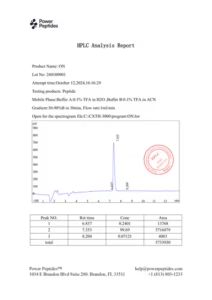
Certificate of Analysis (COA)
Resource
Research Peptides Supported by Verifiable Testing
Power Peptides™ is more than just a U.S. supplier of research peptides. We are helping to power the next wave of peptide research by providing peptides that support our clients’ work.
Consistent Quality Standards
Our internal processes and meticulous material sourcing practices drive consistency. Our peptides meet rigorous internal quality standards.
Independently Verified
Every product undergoes extensive testing, both in-house and through independent, third-party laboratories.
Fast Shipping & Support
We provide fast and reliable shipping, using established couriers and high-quality packaging materials. This helps to ensure that your peptides arrive promptly and in optimal condition.