
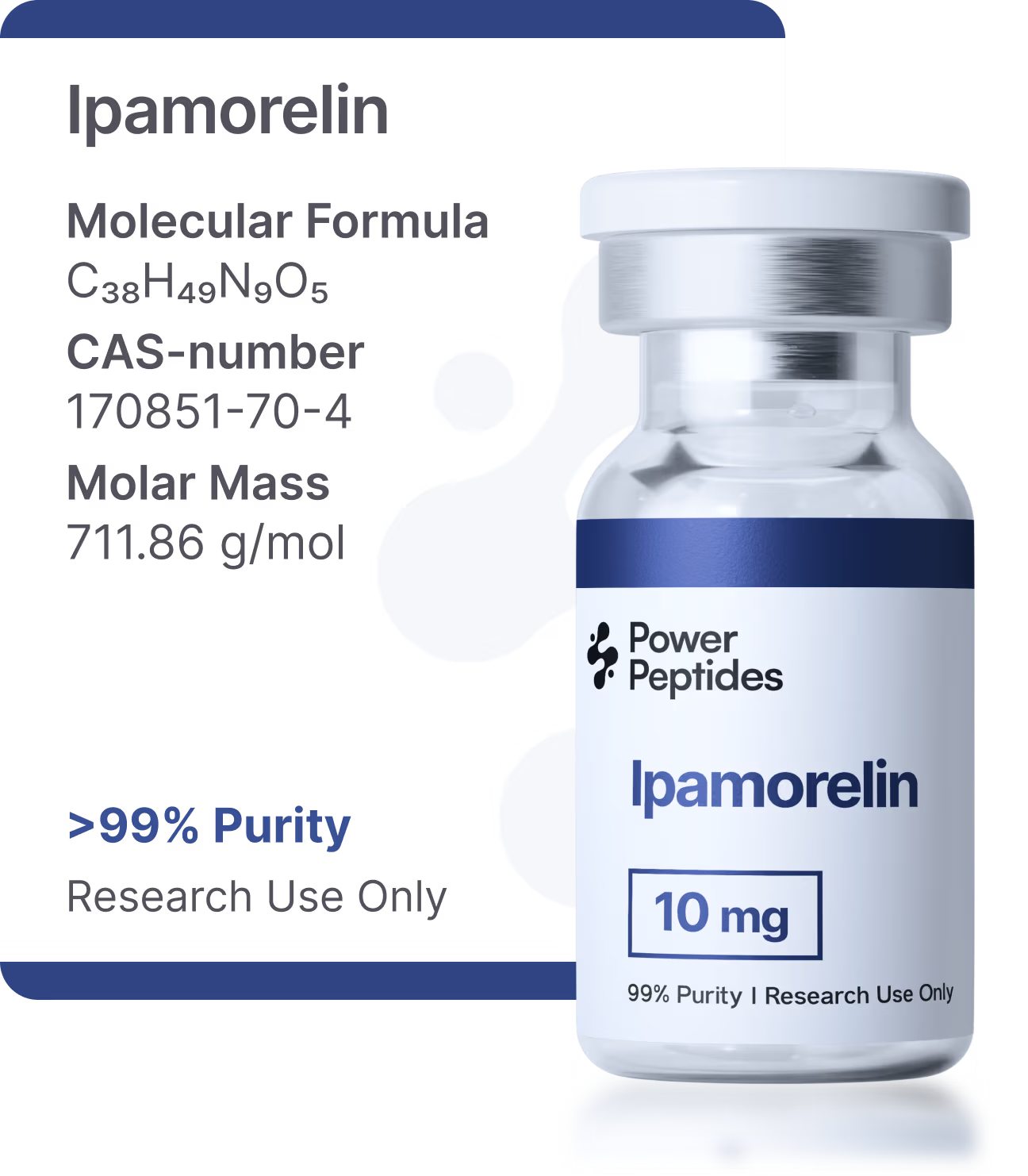

Ipamorelin
Ipamorelin research compound. Supplied as a lyophilized peptide reference material for laboratory research applications.
This product is purity-tested for compound identity and is intended for in vitro experimentation, analytical reference, or scientific characterization studies.
For laboratory research use only. Not for human or veterinary use.
⚡️ Ships Today if ordered within 8 hrs.
🚚 Free FedEx 2Day® on orders $300+
🚚 Free FedEx Standard Overnight® on orders $1000+
♻️ Third party tested.

Product Details
Characteristics
| Molecular Formula | C38H49N9O5 |
| CAS-number | 170851-70-4 |
| Molar Mass | 711.86 g/mol |
| Chemical Formula | H-Aib-His-D-2-Nal-D-Phe-Lys-NH2 |
| Amino Acid Sequence | Aib-His-D-2-Nal-D-Phe-Lys |
| Synonyms | NNC 26-0161, Ipamorelin acetate |
| Solubility | Water-soluble |
| Organoleptic Profile | White to off-white powder |
| Composition | Lyophilized powder – requires reconstitution |
How does Ipamorelin work?
Ipamorelin is a selective agonist of the ghrelin receptor (GHS-R1a) and stimulates the release of growth hormone (GH) from the anterior pituitary gland. Unlike other GH secretagogues, Ipamorelin does not significantly increase levels of adrenocorticotropic hormone (ACTH), cortisol, or prolactin. This selectivity makes Ipamorelin a promising research peptide for studying the effects of GH secretion without the confounding effects of other hormones.
Ipamorelin binds to the GHS-R1a receptor, which is primarily expressed in the hypothalamus and pituitary gland. Upon binding, it triggers a cascade of signaling events that ultimately lead to the synthesis and secretion of GH. The released GH then binds to its receptors in various target tissues, such as the liver, muscle, and bone, to exert its anabolic effects.
Benefits
Based on research studies, Ipamorelin has demonstrated several potential benefits in animal models:
- Growth hormone secretion: Ipamorelin potently stimulates the release of GH from the pituitary gland, which can help maintain or increase lean body mass, reduce body fat, and improve overall body composition.
- Appetite regulation: Ipamorelin has been shown to regulate appetite and food intake in animal studies, suggesting its potential as a research tool in studying metabolic disorders and obesity.
- Bone health: GH plays a crucial role in maintaining bone mineral density and strength. Ipamorelin-induced GH secretion may have potential benefits for bone health, as demonstrated in animal studies.
- Cardiovascular function: Some studies have indicated that Ipamorelin may have positive effects on cardiovascular function, such as improving left ventricular function and reducing systemic vascular resistance in animal models.
- Anti-aging effects: GH levels decline with age, contributing to age-related changes in body composition, bone density, and skin elasticity. Ipamorelin-induced GH secretion may help mitigate some of these age-related changes, as suggested by animal studies.
Side Effects
In animal studies, Ipamorelin appeared to be well-tolerated with minimal side effects.
Summary
Ipamorelin is a research peptide and selective ghrelin receptor agonist that stimulates the secretion of growth hormone (GH) from the pituitary gland. Animal studies have demonstrated its potential benefits in promoting GH release, regulating appetite, improving body composition, supporting bone health, and enhancing cardiovascular function. Ipamorelin’s selectivity for GH secretion without significantly affecting other hormones makes it a promising research tool in the fields of endocrinology, metabolism, and aging. However, further research is needed to fully elucidate its mechanisms of action, potential therapeutic applications, and safety profile in mammalian models.
References:
- Raun, K., Hansen, B. S., Johansen, N. L., Thøgersen, H., Madsen, K., Ankersen, M., & Andersen, P. H. (1998). Ipamorelin, the first selective growth hormone secretagogue. European Journal of Endocrinology, 139(5), 552-561.
- Johansen, P. B., Nowak, J., Skjaerbaek, C., Flyvbjerg, A., Andreassen, T. T., Wilken, M., & Ørskov, H. (1999). Ipamorelin, a new growth-hormone-releasing peptide, induces longitudinal bone growth in rats. Growth Hormone & IGF Research, 9(2), 106-113.
- Svensson, J., Lönn, L., Jansson, J. O., Murphy, G., Wyss, D., Krupa, D., Cerchio, K., Polvino, W., Gertz, B., Boseaus, I., Sjöström, L., & Bengtsson, B. A. (1998). Two-month treatment of obese subjects with the oral growth hormone (GH) secretagogue increases GH secretion, fat-free mass, and energy expenditure. The Journal of Clinical Endocrinology & Metabolism, 83(2), 362-369.
- Ankersen, M., Johansen, N. L., Madsen, K., Hansen, B. S., Raun, K., Nielsen, K. K., Thøgersen, H., Hansen, T. K., Peschke, B., Lau, J., Lundt, B. F., & Andersen, P. H. (1999). A new series of highly potent growth hormone-releasing peptides derived from ipamorelin. Journal of Medicinal Chemistry, 42(19), 3699-3704.
- Gobburu, J. V., Agerso, H., Jusko, W. J., & Ynddal, L. (1999). Pharmacokinetic-pharmacodynamic modeling of ipamorelin, a growth hormone releasing peptide, in human volunteers. Pharmaceutical Research, 16(9), 1412-1416.
- Hansen, B. S., Raun, K., Nielsen, K. K., Johansen, P. B., Hansen, T. K., Peschke, B., Lau, J., Andersen, P. H., & Ankersen, M. (1999). Pharmacological characterisation of a new oral GH secretagogue, NN703. European Journal of Endocrinology, 141(2), 180-189.
- Pihoker, C., Kearns, G. L., French, D., & Bowers, C. Y. (1998). Pharmacokinetics and pharmacodynamics of growth hormone-releasing peptide-2: A phase I study in children. The Journal of Clinical Endocrinology & Metabolism, 83(4), 1168-1172.
- Mericq, V., Cassorla, F., Salazar, T., Avila, A., Iñiguez, G., Bowers, C. Y., & Merriam, G. R. (1998). Effects of eight months treatment with graded doses of a growth hormone (GH)-releasing peptide in GH-deficient children. The Journal of Clinical Endocrinology & Metabolism, 83(7), 2355-2360.
- Bowers, C. Y. (1998). Growth hormone-releasing peptide. Cellular and Molecular Life Sciences (CMLS), 54(12), 1316-1329.
- Ghigo, E., Arvat, E., Muccioli, G., & Camanni, F. (1997). Growth hormone-releasing peptides. European Journal of Endocrinology, 136(5), 445-460.
- Bowers, C. Y., Momany, F. A., Reynolds, G. A., & Hong, A. (1984). On the in vitro and in vivo activity of a new synthetic hexapeptide that acts on the pituitary to specifically release growth hormone. Endocrinology, 114(5), 1537-1545.
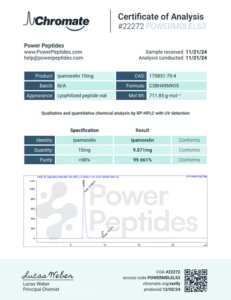
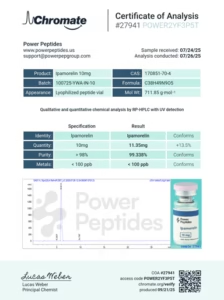
Certificate of Analysis (COA)
Resource
Research Peptides Supported by Verifiable Testing
Power Peptides™ is more than just a U.S. supplier of research peptides. We are helping to power the next wave of peptide research by providing peptides that support our clients’ work.
Consistent Quality Standards
Our internal processes and meticulous material sourcing practices drive consistency. Our peptides meet rigorous internal quality standards.
Independently Verified
Every product undergoes extensive testing, both in-house and through independent, third-party laboratories.
Fast Shipping & Support
We provide fast and reliable shipping, using established couriers and high-quality packaging materials. This helps to ensure that your peptides arrive promptly and in optimal condition.