
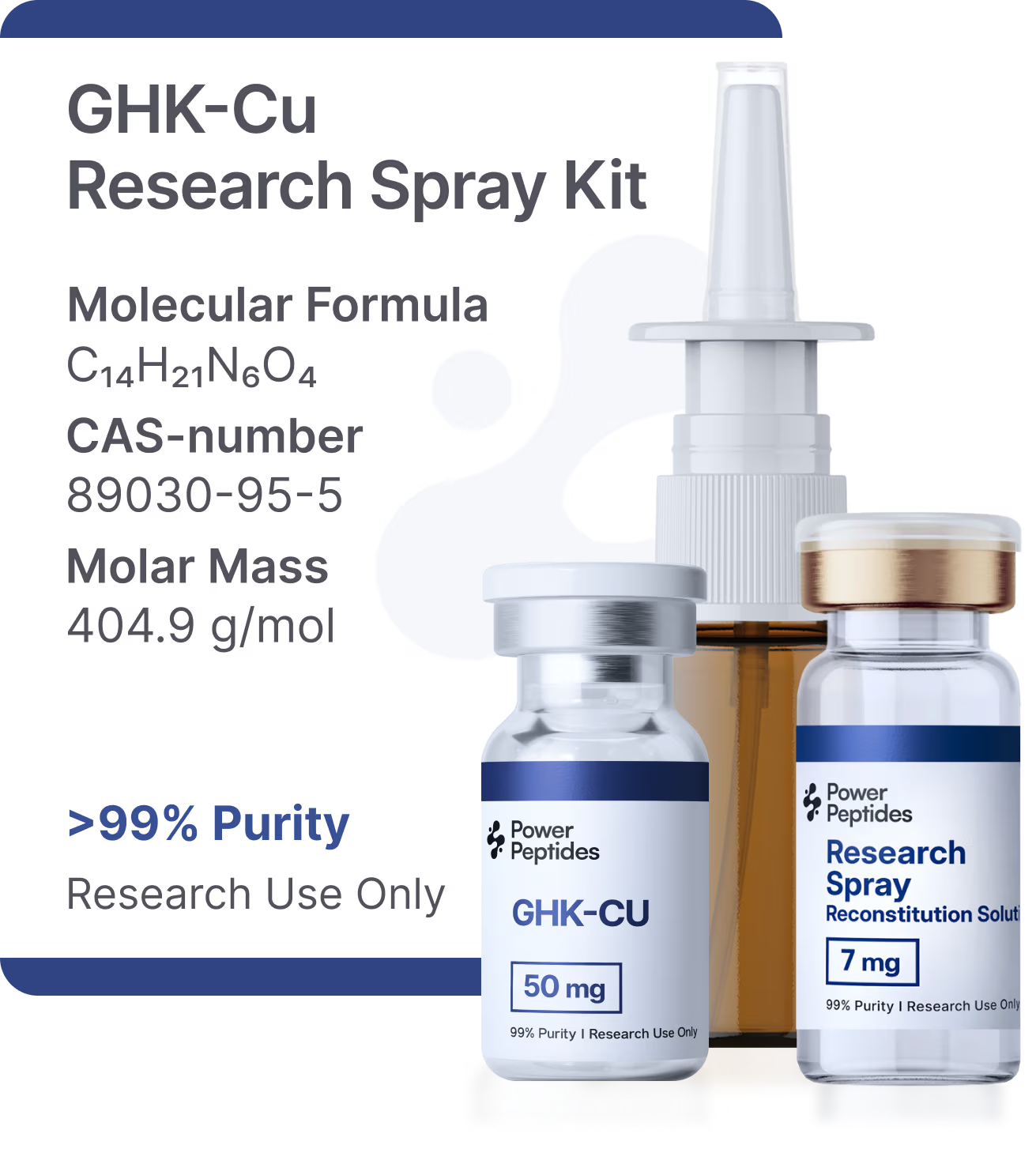

GHK-Cu – 50mg – Research Spray Kit
GHK-Cu research kit. Includes a lyophilized peptide vial and accessory components for laboratory research preparation.
Purity-tested per lot. Intended for compound characterization, reference experiments, or laboratory training applications.
For laboratory research use only. Not for human or veterinary use.
$113.99
⚡️ Ships Today if ordered within 8 hrs.
🚚 Free FedEx 2Day® on orders $300+
🚚 Free FedEx Standard Overnight® on orders $1000+
♻️ Third party tested.

Product Details
Characteristics
| Molecular Formula | C14H21N6O4 |
| CAS | 89030-95-5 |
| Molar Mass | 404.9 g/mol |
| Chemical Formula | C14H21CuN6O4 |
| Amino Acid Sequence | Gly-His-Lys |
| Synonyms | Copper tripeptide-1, Copper-GHK, GHK-Cu, Copper peptide |
| Solubility | Water-soluble |
| Organoleptic Profile | Blue powder |
| Composition | Lyophilized powder – requires reconstitution |
How Is GHK-Cu Used in Research?
GHK-Cu is associated with a range of biological pathways linked to cellular signaling and extracellular matrix dynamics. Its role has been explored in collagen-related processes, angiogenic signaling, and cellular activity within skin-associated cell types such as fibroblasts and keratinocytes. Additional work has focused on its relationship to oxidative stress and inflammatory signaling.
At the molecular level, its relationship to gene expression has been examined, particularly in processes tied to extracellular matrix turnover and cellular signaling. This includes matrix metalloproteinases (MMPs), which are associated with the breakdown and restructuring of proteins such as collagen and elastin.
In addition, scientists have studied GHK-Cu for its ability to bind copper ions, which play a role in enzymatic processes related to collagen structure and cross-linking, including those involving lysyl oxidase. These interactions are associated with broader structural and signaling functions within the extracellular matrix.
Areas of Study
-
Skin structure: GHK-Cu has drawn interest in relation to skin composition and extracellular matrix dynamics, including its connection to collagen-related activity and overall structural organization.
-
Tissue dynamics: Research has also looked at how GHK-Cu relates to cellular behavior tied to tissue organization, including aspects of cell movement, growth patterns, and structural coordination.
-
Oxidative activity: Scientific work in this area has examined GHK-Cu’s relationship to oxidative balance and cellular responses to environmental stressors.
-
Follicular function: Additional attention has been given to GHK-Cu’s connection with hair follicle biology, including factors linked to growth cycle behavior and cellular activity within the follicle environment.
-
Neural systems: Interest has also extended to GHK-Cu’s relationship with neural activity and cellular stress responses, particularly in areas tied to oxidative balance and protein regulation.
Summary
GHK-Cu is a naturally occurring peptide complex that has attracted attention for its role in a variety of biological systems. Recent research highlights its connection to extracellular matrix dynamics, cellular activity, and oxidative balance, along with areas related to skin biology and structural organization.
Existing findings offer insight into how this compound interacts within these systems, though its full range of biological activity is still being defined. Continued investigation will help clarify how these interactions vary across different experimental conditions.
As with any research material, appropriate handling practices and established laboratory guidelines should be followed. Ongoing scientific interest reflects GHK-Cu’s relevance as a tool for studying complex cellular and biochemical functions.
References
- Wang Y, Lin J, Yu Z, Cheng J, Cheng J, Cui W. Rigid-flexible nanocarriers loaded with active peptides for antioxidant and anti-inflammatory applications in skin. Colloids Surf B Biointerfaces. 2024.
- Rakhmetova KK, Mishina ES, Bobyntsev II, Bezhin AI, Vorvul AO. Effects of Gly-His-Lys-D-Ala Peptide on Skin Wound Regeneration Processes. Bull Exp Biol Med. 2024.
- Tucker M, Liao GY, Park JY, Rosenfeld M, Wezeman J, Mangalindan R, Ratner D, Darvas M, Ladiges W. Behavioral and neuropathological features of Alzheimer’s disease are attenuated in 5xFAD mice treated with intranasal GHK peptide. bioRxiv [Preprint]. 2023.
- Liu T, Liu Y, Zhao X, Zhang L, Wang W, Bai D, Liao Y, Wang Z, Wang M, Zhang J. Thermodynamically stable ionic liquid microemulsions pioneer pathways for topical delivery and peptide application. Bioact Mater. 2023.
- Tucker M, Keely A, Park JY, Rosenfeld M, Wezeman J, Mangalindan R, Ratner D, Ladiges W. Intranasal GHK peptide enhances resilience to cognitive decline in aging mice. bioRxiv [Preprint]. 2023.
- Zhang Q, Liu J, Deng MM, Tong R, Hou G. Relief of ovalbumin-induced airway remodeling by the glycyl-l-histidyl-l-lysine-Cu2+ tripeptide complex via activation of SIRT1 in airway epithelial cells. Biomed Pharmacother. 2023.
- Ren Z, Liu C, Wei Y, Liu C, Shi C, Wang X, Tang Y, Wang R, Liu Z. Multi working mode SPR chip laboratory for high refractive index detection. Opt Express. 2023
- Wang F, Yu X, Yu Z, Cui Y, Xu L, Huo S, Ding Z, Zhao L, Du L, Qiu Y. Improved laccase production by Trametes versicolor using Copper-Glycyl-L-Histidyl-L-Lysine as a novel and high-efficient inducer. Front Bioeng Biotechnol. 2023.
- Jiang F, Wu Y, Liu Z, Hong M, Huang Y. Synergy of GHK-Cu and hyaluronic acid on collagen IV upregulation via fibroblast and ex-vivo skin tests. J Cosmet Dermatol. 2023.
- Deng M, Zhang Q, Yan L, Bian Y, Li R, Gao J, Wang Y, Miao J, Li J, Zhou X, Hou G. Glycyl-l-histidyl-l-lysine-Cu2+ rescues cigarette smoking-induced skeletal muscle dysfunction via a sirtuin 1-dependent pathway. J Cachexia Sarcopenia Muscle. 2023
Certificate of Analysis (COA)
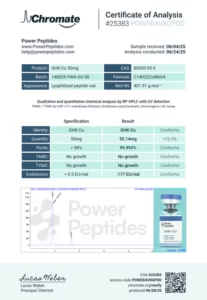
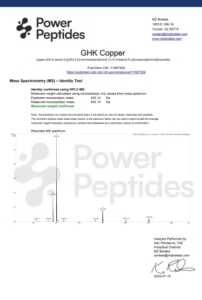
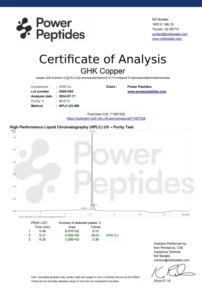
Resource
Research Peptides Supported by Verifiable Testing
Power Peptides™ is more than just a U.S. supplier of research peptides. We are helping to power the next wave of peptide research by providing peptides that support our clients’ work.
Consistent Quality Standards
Our internal processes and meticulous material sourcing practices drive consistency. Our peptides meet rigorous internal quality standards.
Independently Verified
Every product undergoes extensive testing, both in-house and through independent, third-party laboratories.
Fast Shipping & Support
We provide fast and reliable shipping, using established couriers and high-quality packaging materials. This helps to ensure that your peptides arrive promptly and in optimal condition.